The Sweet Pea: A Fragrant Whisper of Sicilian Spring
The story of the Sweet Pea (Lathyrus odoratus) begins in the late 17th century on the sun-drenched hillsides of Sicily. Discovered by a Franciscan monk named Father Franciscus Cupani in 1696, the original wild flower was a humble yet intoxicatingly fragrant bloom with deep purple and maroon petals. By 1699, seeds had made their way to England, where they eventually became the darlings of the Victorian era. In the language of flowers, the Sweet Pea is a symbol of "blissful pleasure" and gratitude, often given as a heartfelt "thank you" or a tender "farewell." In the high-end floral landscape of Hong Kong, these blooms are cherished for their ephemeral beauty and a rare, honey-sweet scent that evokes a sense of nostalgic elegance and the arrival of a gentle spring.
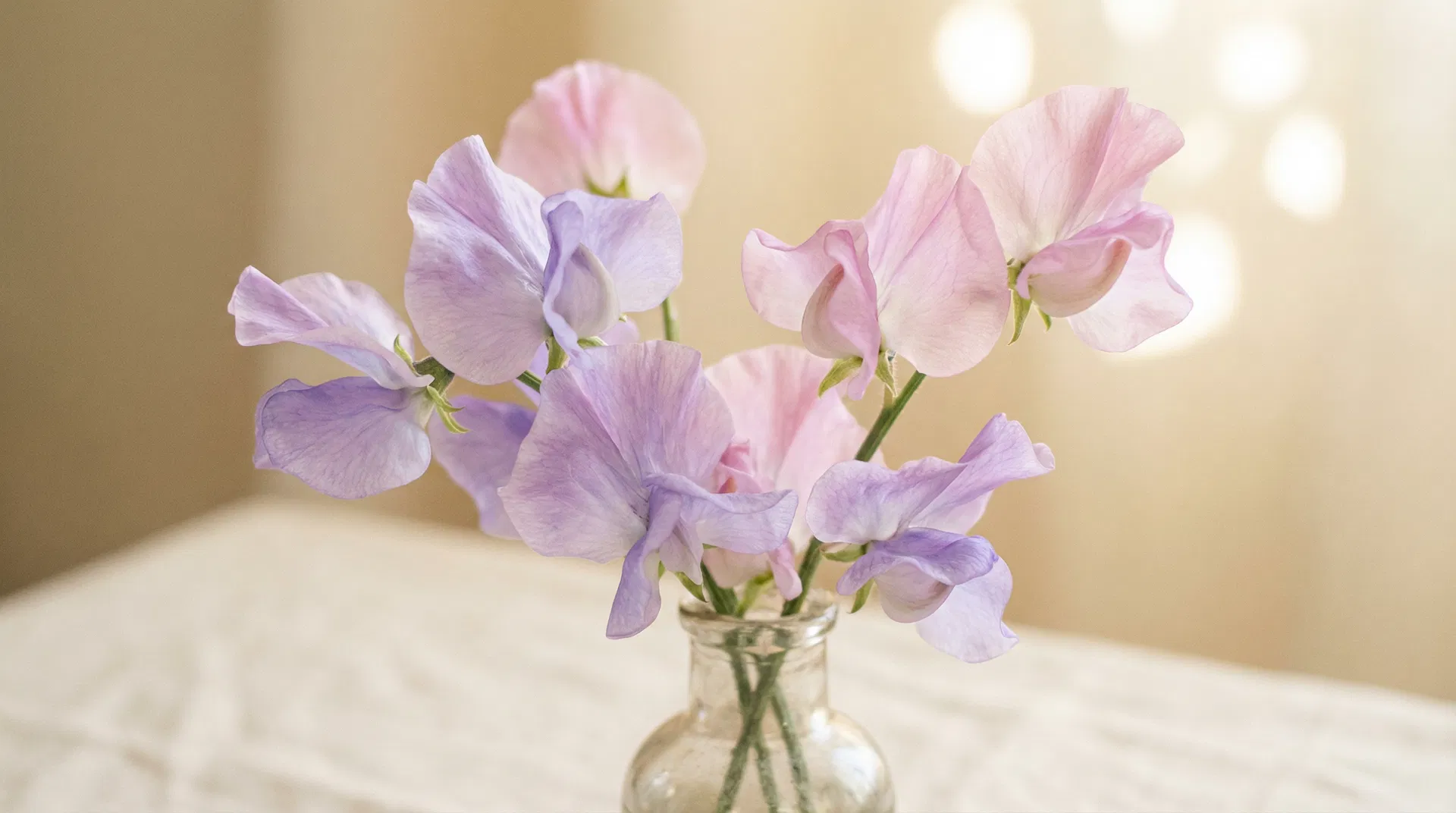
What makes the Sweet Pea truly exceptional as a cut flower is its unparalleled sensory appeal and its distinctive, airy form. Its ruffled, papery petals resemble the delicate wings of a butterfly, perched upon slender, gracefully curving stems that lend a natural sense of movement to any arrangement. Unlike many modern mass-produced flowers that have lost their scent in favor of shelf life, the Sweet Pea remains a bastion of fragrance, filling a room with its light, floral perfume. This combination of visual delicacy and olfactory richness makes it a prized selection for discerning florists who seek to create designs that feel both romantic and deeply personal.
In the art of floral design, the Sweet Pea is a versatile gem that excels as both a focal point in intimate posies and an ethereal accent in larger, garden-style installations. Its winding stems and soft texture provide a much-needed "airiness," breaking up the density of heavier blooms like garden roses or peonies. To keep these delicate beauties fresh at home, they require a little extra care: always re-cut their stems at a sharp 45-degree angle and place them in cool, clean water mixed with a bit of flower food. Because they are sensitive to ethylene, it is best to keep your Sweet Peas away from ripening fruit and direct sunlight, ensuring their "blissful pleasure" lingers for as long as possible.